
Bunka vs Santoku: Which Japanese Knife Should You Choose?
Bunka and santoku are close cousins, both flat, all-purpose Japanese knives for everyday prep. The difference is the tip: the bunka has a sharp, angled k-tip for precise, detailed work, while the santoku has a rounded, forgiving tip. Pick the santoku for simple everyday cooking, the bunka for that same blade with extra tip control.
Bunka vs Santoku: the key differences
Same flat, multi-purpose blade, different tip. That tip is what changes how each one handles detail work.
| Bunka | Santoku | |
|---|---|---|
| Tip | Sharp, angled k-tip (reverse tanto) | Rounded sheep’s-foot |
| Blade | Flat, multi-purpose | Flat, multi-purpose |
| Length | 165 to 180 mm | 165 to 180 mm |
| Best for | Everyday prep plus detailed tip work | Everyday push cuts, forgiving |
| Feel | Precise, a little more advanced | Simple and safe |
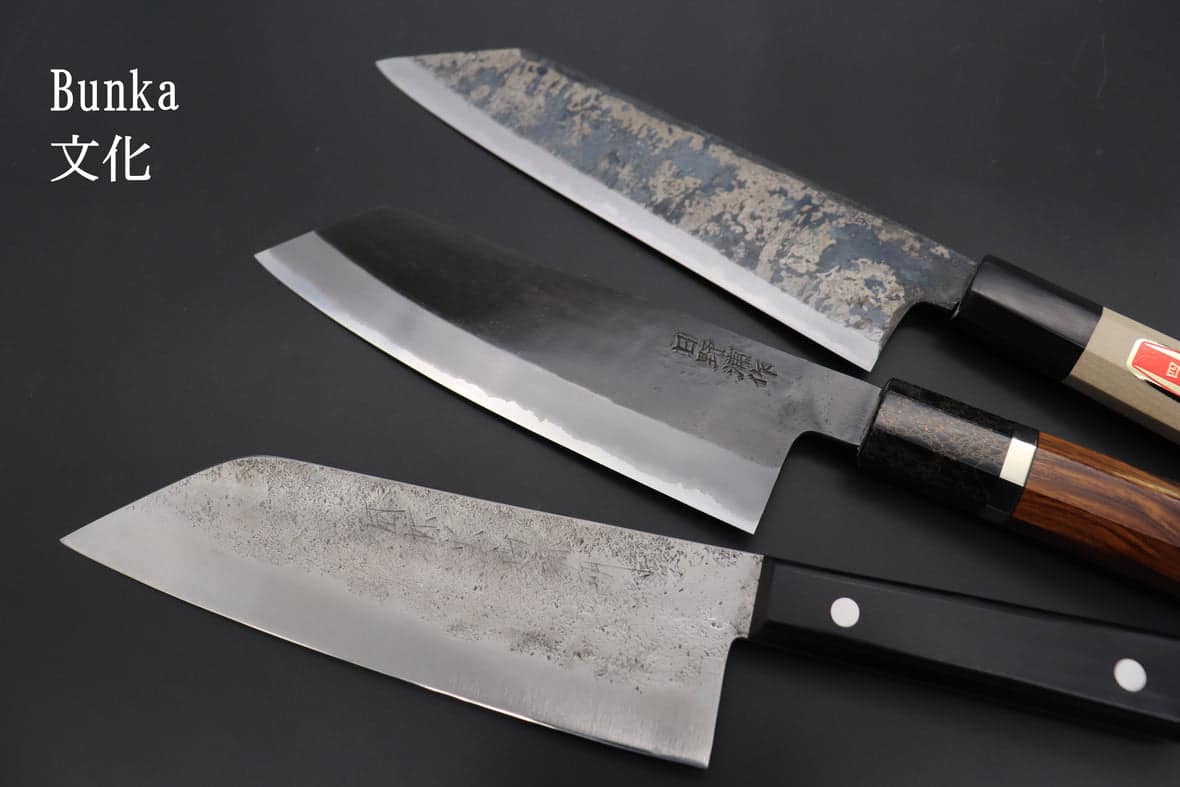
Bunka: the all-rounder with a precise tip
The bunka shares the santoku’s flat, all-purpose blade but swaps the rounded tip for a sharp, angled k-tip. That point adds precision for scoring, trimming and detailed work a rounded blade cannot reach, while the rest of the edge handles the same everyday slicing, dicing and mincing.
It suits cooks who want one flexible blade with a little more finesse. The k-tip does take slightly more care than a rounded tip, but the everyday cutting feel is very close to a santoku, so most cooks adapt to it quickly.
Shop BunkaSantoku: the simple, forgiving everyday knife
The santoku is the all-purpose Japanese knife with a flat edge and a rounded, blunt tip made for safe, straight push cuts. The whole edge meets the board for clean, uniform slices, and the tall blade scoops food off the board.
It is lighter and more forgiving than a chef’s knife and an easy first Japanese knife to own. If you want a no-fuss everyday blade and do not need a precise tip, the santoku is the simpler choice.
Shop Santoku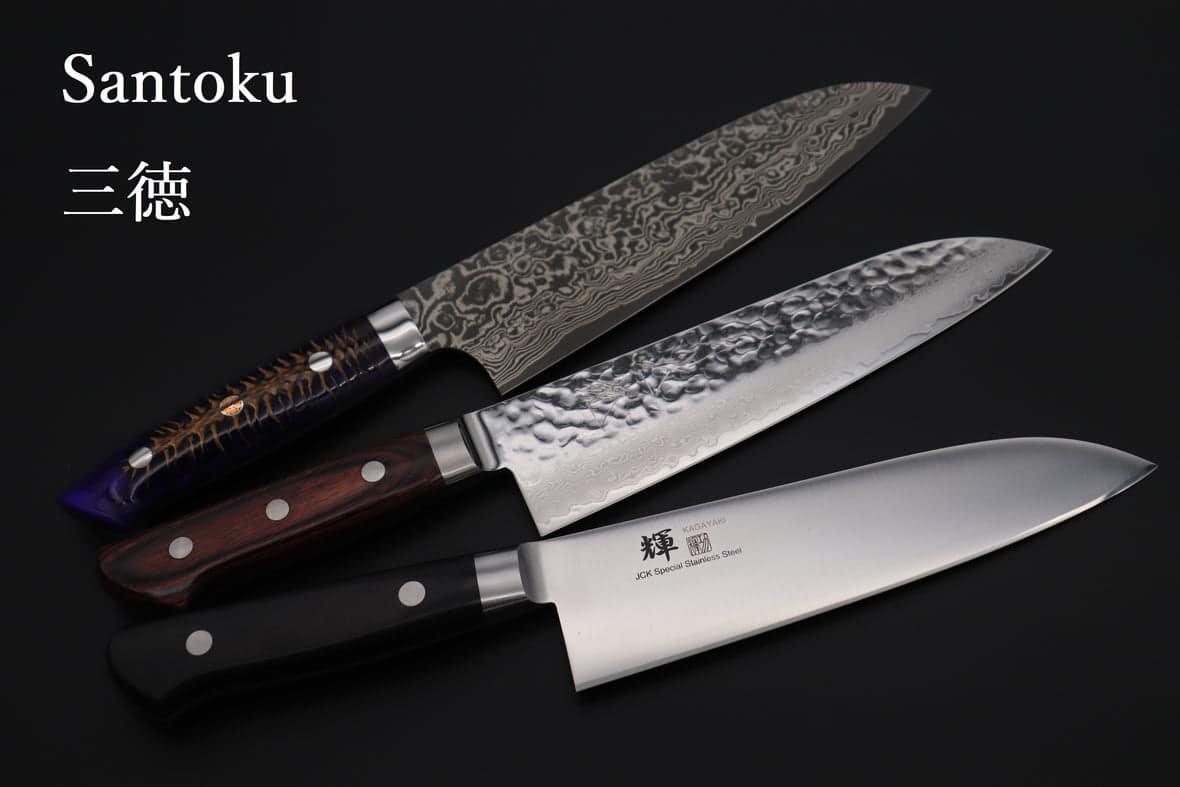
Which should you buy?
Choose a santoku for a simple, forgiving everyday knife; choose a bunka if you like that same flat all-round blade but want a precise tip for detailed jobs.
Bunka for tip precision
You want an all-purpose flat blade plus a sharp k-tip for scoring, trimming and detailed cuts.
Santoku for simple everyday use
You want a forgiving, safe, do-most-things knife and do not need a precise tip. It is the easier first knife.
Bunka vs Santoku: frequently asked questions
What is the difference between a bunka and a santoku?
They share the same flat, multi-purpose blade, but the bunka has a pointed k-tip while the santoku has a rounded tip. The bunka trades a little safety for tip precision; the santoku is simpler and more forgiving.
Is a bunka harder to use than a santoku?
Only slightly. The sharp k-tip needs a little more care than a rounded tip, but the flat cutting edge is used exactly like a santoku, so the everyday feel is very similar.
Which is better for beginners?
The santoku, thanks to its safe rounded tip and simple push-cut style. Move to a bunka when you want the extra tip precision for detailed work.
Find your all-purpose Japanese knife
Whether you want the precise k-tip of a bunka or the simple ease of a santoku, explore the range and find your everyday blade.