
Gyuto vs Santoku: Which Japanese Knife Should You Choose?
Both are all-purpose Japanese knives, so the honest answer is that either will serve you well. The gyuto is the longer, curved do-everything chef’s knife with the reach to rock-chop and break down large produce and proteins; the santoku is the shorter, lighter, flatter blade that flies through push cuts and vegetable prep in a compact space.
Gyuto vs Santoku: the key differences
Both handle vegetables, meat and fish. The real differences come down to length, tip shape, edge profile and how you like to cut.
| Gyuto | Santoku | |
|---|---|---|
| Type | Japanese chef’s knife | All-purpose Japanese knife |
| Blade length | 210 to 240 mm | 165 to 180 mm |
| Tip | Pointed, with a curved belly | Rounded sheep’s-foot |
| Edge profile | Curved for rocking and slicing | Flat for push cuts |
| Cutting style | Rock-chopping and slicing | Straight up-and-down push cuts |
| Best for | Reach, large produce and proteins | Fast vegetable prep, tight spaces |
| Feel | Longer, forward balance | Lighter and more nimble |
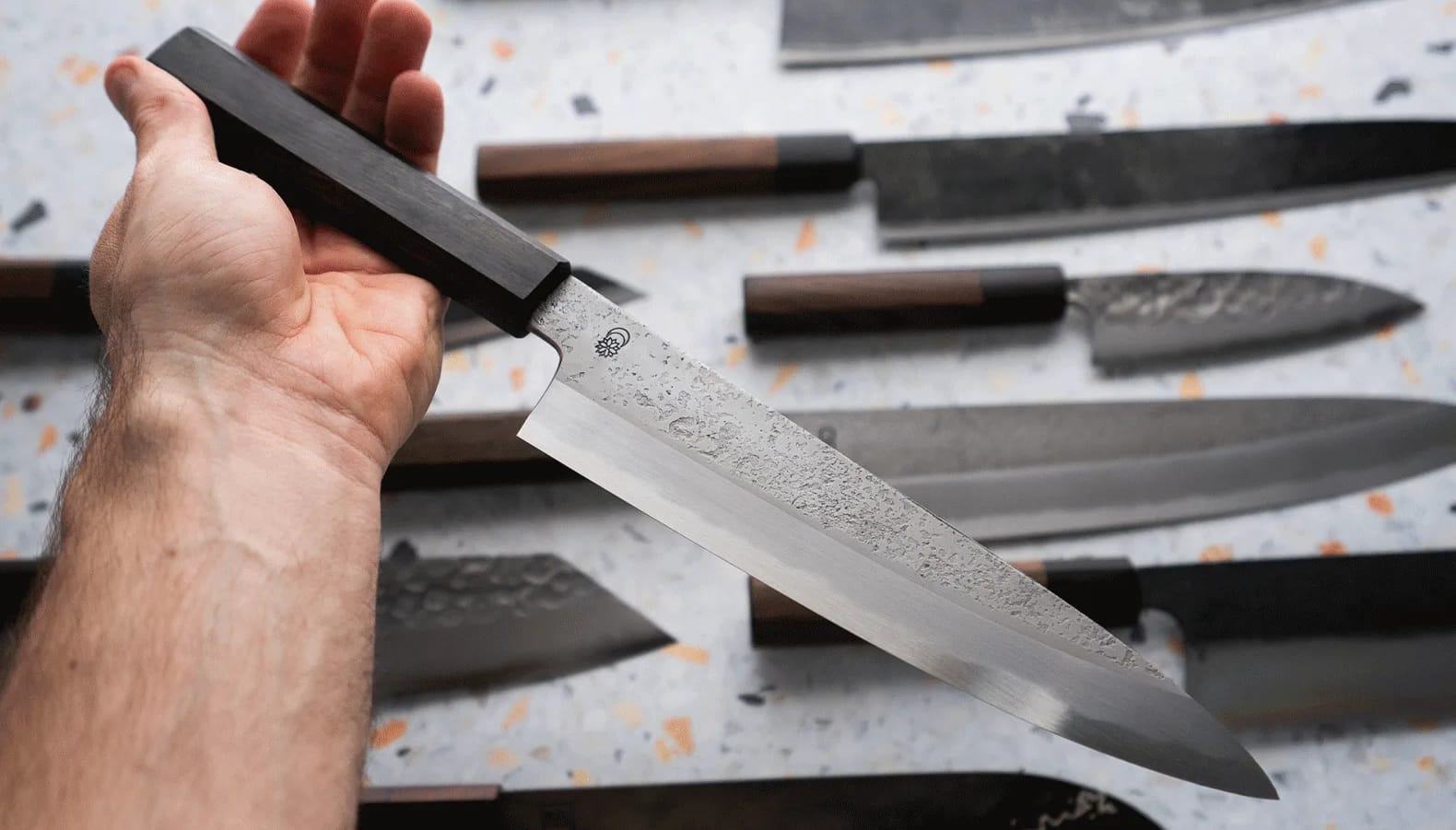
Gyuto: the do-everything chef’s knife
The gyuto is the Japanese answer to the Western chef’s knife, and its name literally means “beef sword”. The blade runs a generous 210 to 240 mm with a curved belly that sweeps up to a fine, pointed tip. That length and curve are what make it so versatile: you get reach and leverage for large produce, the belly for a gentle rocking motion, and a precise tip for detail work.
If you break down proteins, carve roasts, cut big items like squash, cabbage or melon, or you simply learned to cook with a Western chef’s knife and rock the blade, the gyuto will feel immediately at home. A 210 mm gyuto is the sweet spot for most home kitchens; 240 mm suits bigger boards and pro use. It is the most flexible single knife you can own, which is why so many cooks reach for it first.
Shop GyutoSantoku: the fast, forgiving everyday knife
Santoku means “three virtues”, a nod to how well it handles meat, vegetables and fish. The blade is shorter at 165 to 180 mm, taller and flatter, and finishes in a rounded, blunt sheep’s-foot tip. Because the edge is flat, the whole blade meets the board at once, giving clean, uniform slices with a simple up-and-down push cut.
That flat profile makes the santoku lighter, more nimble and easy to control, which is a real advantage in a small kitchen or with smaller hands. The tall blade also scoops chopped food straight off the board, and the rounded tip is forgiving and safe. If most of your prep is vegetables and you prefer chopping to rocking, the santoku is the more comfortable, efficient choice.
Shop Santoku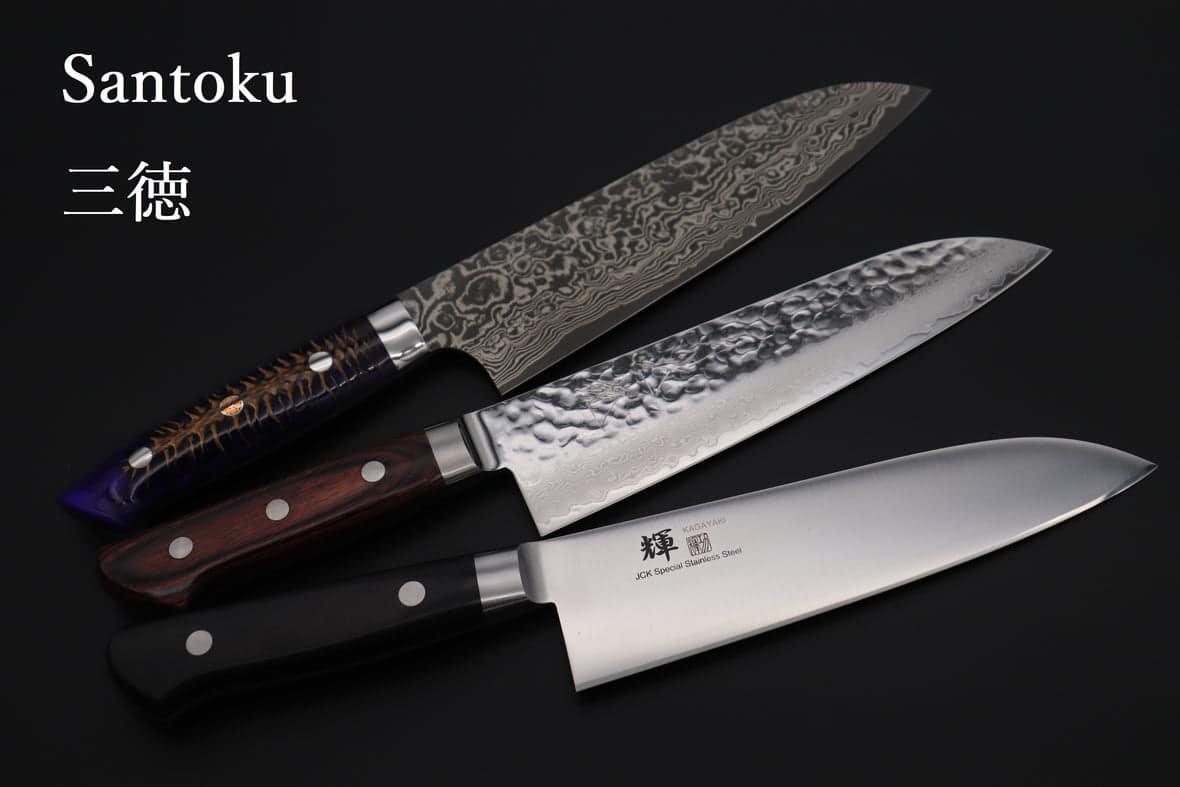
Which should you buy?
For one knife to do everything, the gyuto edges it thanks to its length and pointed tip. If your prep is mostly vegetables or your counter space is tight, the santoku is the more comfortable pick. Plenty of cooks end up with both.
Gyuto if you want reach and versatility
You break down proteins, cut large produce, or prefer a longer knife and rock-chopping. A 210 mm gyuto is the most do-everything first knife.
Santoku if you want a nimble everyday knife
Most of your prep is vegetables, you have limited space or smaller hands, and you prefer clean straight push cuts to rocking.
Cutting technique and sizing
The two knives reward different techniques. A gyuto’s curve lets you keep the tip on the board and rock through herbs and garlic, or lift and push for clean slices. A santoku’s flat edge wants a straight push cut, lifting the whole blade and pressing straight down so the edge meets the board evenly. Neither is hard to learn, but matching the knife to how you naturally cut makes prep faster and more enjoyable.
On size, a 210 mm gyuto or a 165 to 180 mm santoku suits most home cooks. Whichever you choose, the hard Japanese steel takes a keener edge than a typical Western knife, so keep the blade off bone and frozen food and finish it on a whetstone to keep it slicing cleanly.
Gyuto vs Santoku: frequently asked questions
Should I buy a gyuto or a santoku?
Buy a gyuto if you want one versatile, do-everything knife with reach for proteins and large produce; buy a santoku if most of your prep is vegetables and you want a shorter, lighter blade for push cuts.
Is a gyuto good for beginners?
Yes. A 210 mm gyuto is a forgiving, do-everything first Japanese knife. Beginners who prefer chopping to rocking, or who have smaller hands or counters, often find a santoku easier to start with.
Can you rock-chop with a gyuto?
Yes. The gyuto’s curved belly is made for a gentle rocking motion as well as push cuts, which is part of why it is so versatile. A santoku’s flat edge suits straight push cuts rather than rocking.
Do you need both a gyuto and a santoku?
No, either covers most kitchen tasks on its own. Many cooks own both because they complement each other: the gyuto for length and rocking, the santoku for nimble vegetable prep.
Find your Japanese chef knife
Whether you go for the reach of a gyuto or the nimble control of a santoku, explore the range and find the blade that fits how you cook.