
Single Bevel vs Double Bevel: Japanese Knife Edges Explained
A double-bevel knife is sharpened on both sides, cuts straight, works in either hand and is easy to sharpen, which is why most everyday Japanese knives are double-bevelled. A single-bevel knife is sharpened on one side only, giving an extremely sharp, precise edge for tasks like sashimi and katsuramuki, but it takes real skill to use and sharpen.
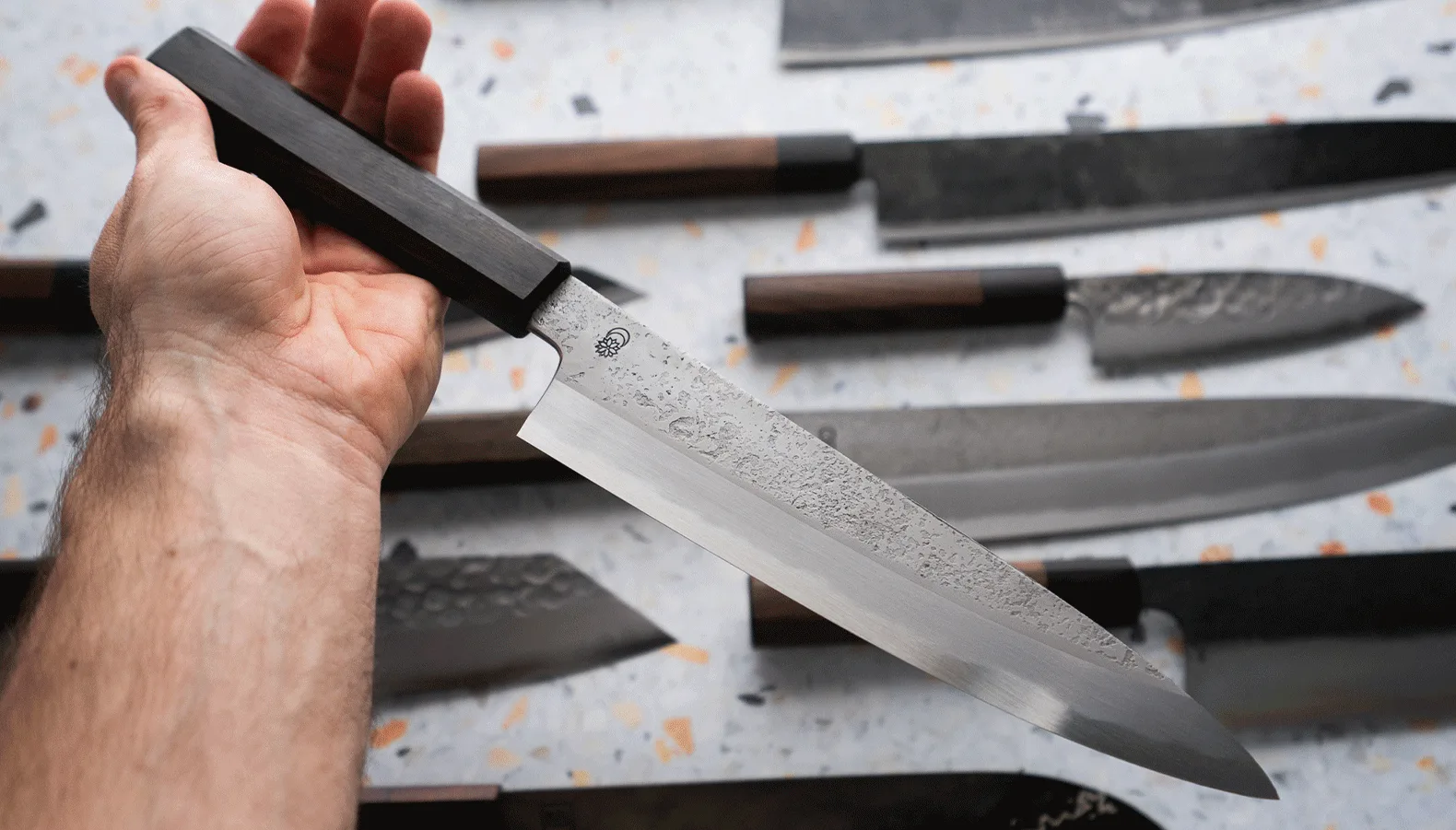
Double-bevel knives
A double-bevel edge is ground on both sides, like a Western knife, so it cuts straight down without veering and works comfortably in either hand. It is forgiving, versatile and simple to sharpen.
That is why gyuto, santoku, nakiri and sujihiki are all double-bevelled. For almost every home cook this is the right choice, an edge you can use every day and keep keen without special technique.
Single-bevel knives
A single-bevel edge is ground on one side only, with a flat back and a slightly hollow face. This gives an exceptionally keen, precise edge for traditional tasks: slicing sashimi with a yanagiba, katsuramuki with an usuba, filleting with a deba.
The trade-off is that the blade steers to one side while cutting and needs a specific sharpening technique, and most single-bevel knives are made for right-handed use. It is a specialist edge, worth learning only for the jobs it does best.
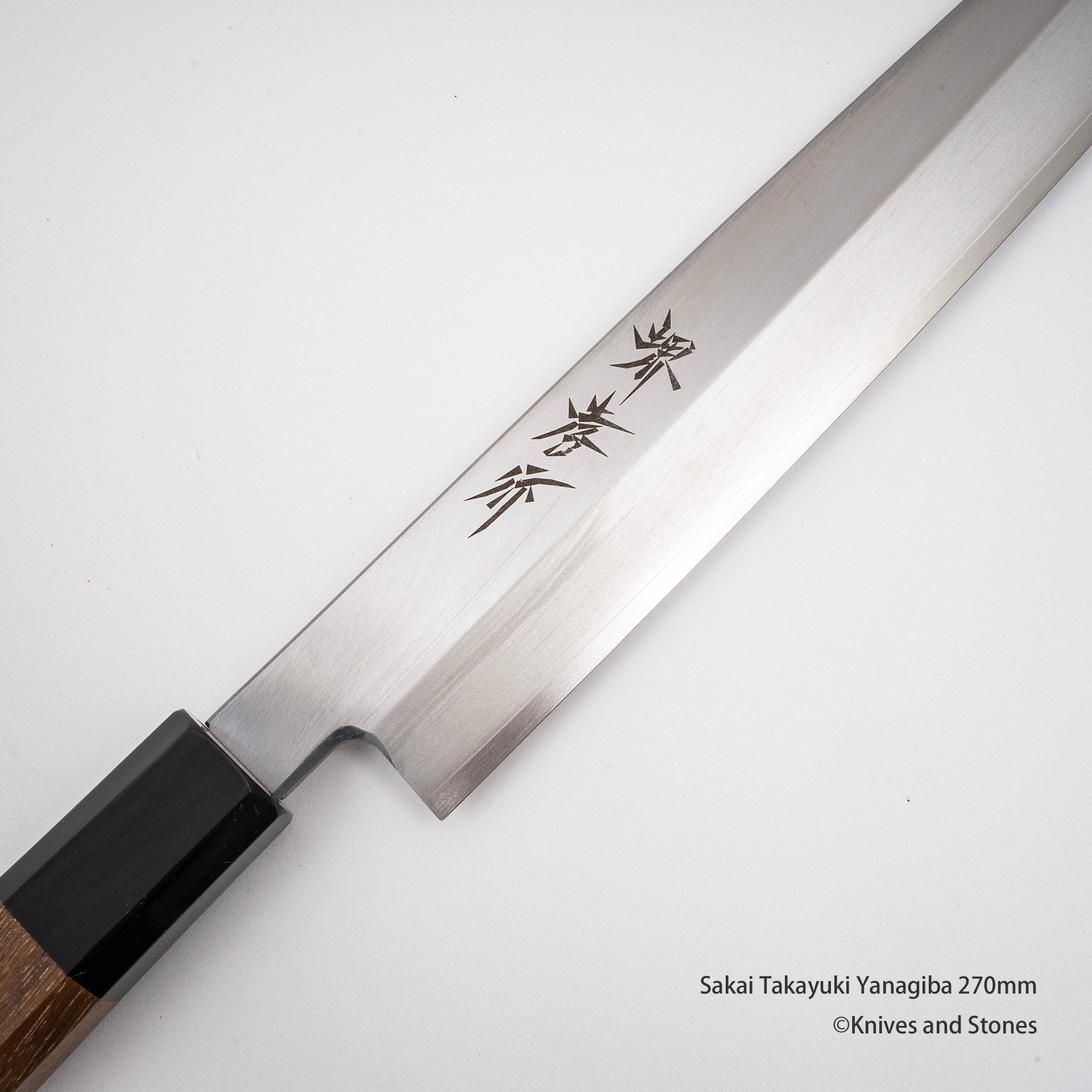
Single bevel vs double bevel
| Double bevel | Single bevel | |
|---|---|---|
| Sharpened | Both sides | One side (flat back) |
| Cutting | Tracks straight | Steers to one side |
| Handedness | Either hand | Usually right-handed only |
| Skill | Easy for anyone | Needs practice and technique |
| Examples | Gyuto, santoku, nakiri, sujihiki | Yanagiba, usuba, deba |
Bevel FAQ
What is the difference between single bevel and double bevel?
A double-bevel knife is sharpened on both sides and cuts straight for either hand; a single-bevel knife is sharpened on one side for an extremely keen, precise edge, but it steers as you cut and needs more skill to use and sharpen.
Are single-bevel knives better?
Not better, more specialised. They give a cleaner, more precise cut for tasks like sashimi and garnish work, but double-bevel knives are more versatile and far easier for everyday cooking.
Can you sharpen a single-bevel knife at home?
Yes, on a whetstone, but it needs care: you work the single bevel at a precise angle and lightly flatten the back. It is more demanding than sharpening a double-bevel edge.
Find the right Japanese knife
From versatile double-bevel chef knives to specialist single-bevel blades, explore the range at Knives and Stones.