
Japanese Chef Knives
Japanese chef knives are the all-purpose blades at the heart of the kitchen, thinner, harder and sharper than their Western counterparts so they glide through food with less effort and hold a keener edge. The classic shape is the gyuto, joined by the flatter santoku and the pointed bunka, each built for everyday slicing, dicing and prep. Whether you want your first serious knife or are adding to a set, this is where to start. Our range runs to 100 Japanese chef knives, from $90.00.
-

-
$594.99
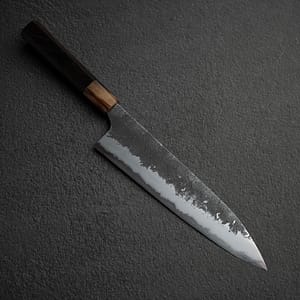
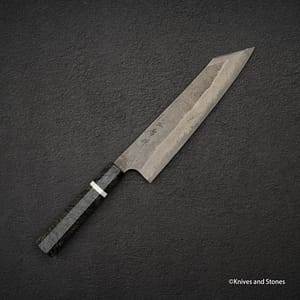
$699.00Nigara Ginsan Kurozome Damascus K-tip Gyuto 240mm
$594.99$699.00


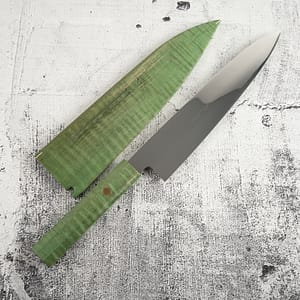
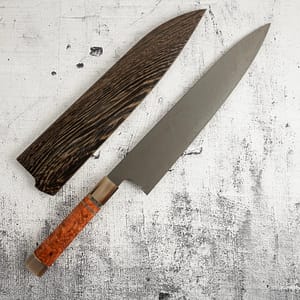

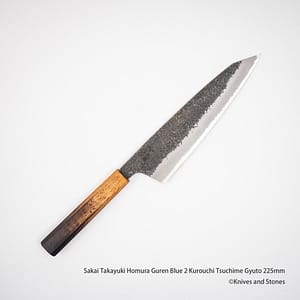

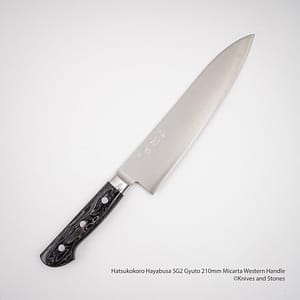
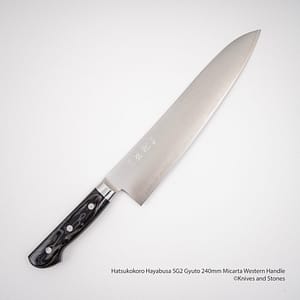
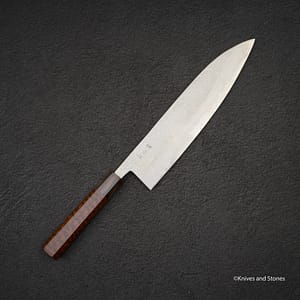

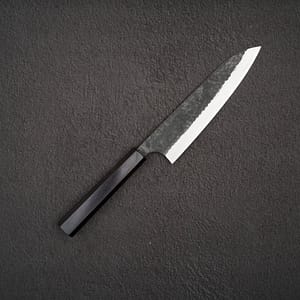
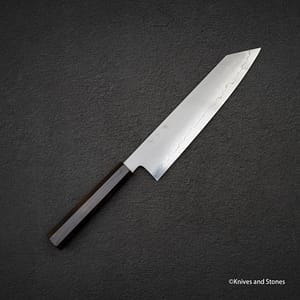




Types of Japanese chef knife
| Knife type | Detail |
|---|---|
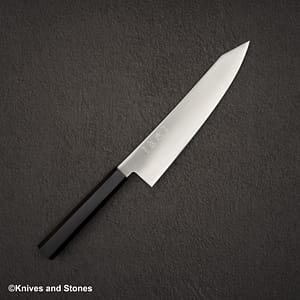
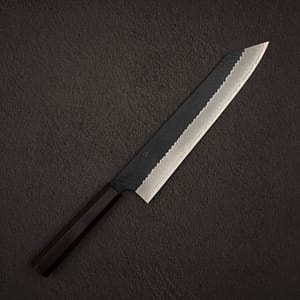
| Gyuto | The classic all-purpose chef knife for slicing, dicing and rock-chopping |
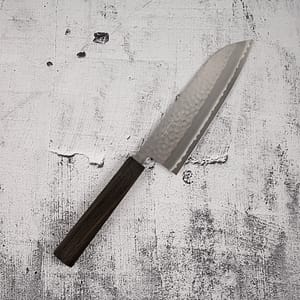
| Santoku | A shorter, flatter all-rounder for straight push cuts |
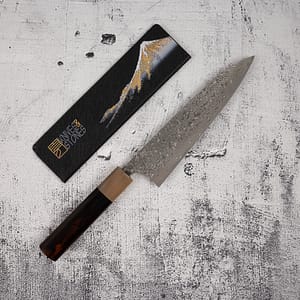
| Bunka | A multi-purpose blade with a sharp k-tip for detailed work |
About these knives
We stock 100 of them, from $90.00 to $379.95, across gyuto, santoku and bunka shapes and a range of makers, steels and sizes. Every blade is chosen for cutting performance and craftsmanship rather than to fill a catalogue, and the harder Japanese steel holds a keener edge than a typical Western knife. Keep any of them off bone and frozen food and finish on a whetstone.
How to choose one
Start with the shape that matches how you cook: a gyuto if you want one do-everything blade with a curve for rock-chopping, a santoku if you prefer a shorter, lighter knife for straight push cuts, or a bunka if you want a pointed tip for detailed work. For size, a 210 mm gyuto or a 165 to 180 mm santoku suits most home kitchens. Then choose steel: stainless such as VG10 for easy care, or carbon such as White and Blue for an even keener edge.
Japanese chef knife questions
What is a Japanese chef knife called?
The classic Japanese chef knife is the gyuto, the all-purpose equivalent of a Western chef knife. The santoku and the k-tipped bunka are the other main all-purpose shapes.
Which is better, a santoku or a gyuto?
A gyuto is longer and curved for both slicing and rock-chopping, with more reach; a santoku is shorter and flatter for straight push cuts and feels lighter. Choose the gyuto for versatility, the santoku for a nimble everyday knife.
How much should a good Japanese chef knife cost?
A solid entry-level knife starts at the lower end of our range, while premium hand-forged blades in high-end steels cost more. Most home cooks are well served in the middle, where quality steel meets fair value.
What is the best Japanese chef knife?
The best one is the shape and size that fits your hand and how you cook. For most people a 210 mm gyuto or a 180 mm santoku from a respected maker is an excellent, versatile first choice.
Related Japanese knife ranges
Related ranges: Japanese vegetable knives, slicing knives and Japanese sharpening stones. New to Japanese knives? Read a beginner guide to Japanese knives and our Japanese knife steel guide.