
Japanese Vegetable Knives
Japanese vegetable knives are flat, tall blades built for one job done perfectly: clean, precise cuts through produce with the whole edge meeting the board. The double-bevel nakiri is the easy everyday choice, while the single-bevel usuba is the professional's precision tool for paper-thin slicing and decorative work. Our range runs to 36 of them, from $129.95.
-

-

-
$209.95
$229.95Hatsukokoro Hayabusa Aogami Super K-tip Nakiri 180mm
$209.95$229.95


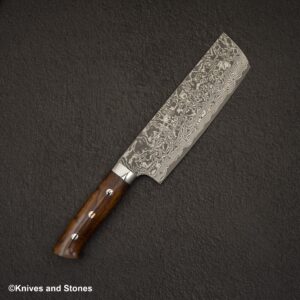


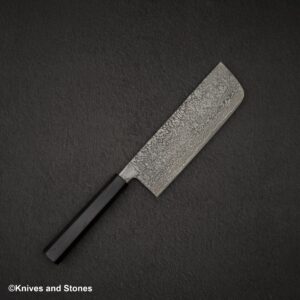


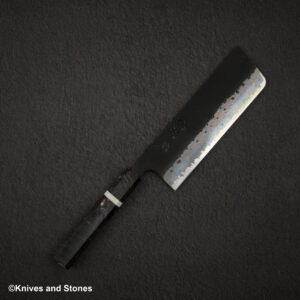
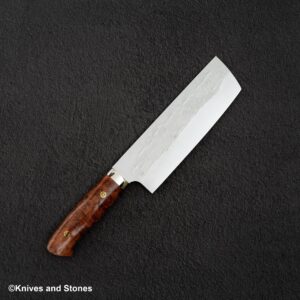


Types of vegetable knife
| Knife type | Detail |
|---|---|
| Nakiri | Double-bevel and easy to use, the everyday vegetable knife |
| Usuba | Single-bevel and precise, the professional vegetable knife |
About these knives
We stock 36 of them, from $129.95 to $649.00, in double-bevel nakiri and single-bevel usuba styles. The flat profile sits fully on the board for clean straight cuts, and the tall blade scoops prepped food away. Keep the fine edge off bone and frozen food and finish on a whetstone.
How to choose one
For most cooks the nakiri is the answer: double-bevelled, ambidextrous and easy to sharpen, it handles daily vegetable prep with clean push cuts. Step up to a single-bevel usuba if you do high-end presentation work such as katsuramuki and have the skill to steer and sharpen a single bevel. Both take a keen edge, so keep them off bone and hard squash.
Japanese vegetable knife questions
What is a Japanese vegetable knife called?
The two main types are the nakiri, a double-bevel everyday vegetable knife, and the usuba, a single-bevel professional one. Both are flat, tall blades made for clean vegetable cuts.
What is the difference between a nakiri and an usuba?
A nakiri is double-bevelled, easy to use and simple to sharpen; an usuba is single-bevelled, sharper for fine work but harder to master. The nakiri suits home cooks, the usuba professionals.
Do I need a dedicated vegetable knife?
If you prep a lot of produce, yes. A flat blade cuts cleaner and faster than a curved chef knife on vegetables, though a gyuto or santoku will still cover the job if you prefer one blade.
Related Japanese knife ranges
Related ranges: chef knives, santoku knives and Japanese whetstones. For more, see the nakiri explained and how the nakiri and usuba compare.