
Japanese Knife Steel Guide: Carbon vs Stainless, White vs Blue
Japanese knives are prized for their steel, which gives them a keener edge and longer edge retention than most Western blades. The big choice is carbon versus stainless: carbon steels take a sharper edge but need care to avoid rust, while stainless steels are lower maintenance.

Carbon vs stainless
Carbon steels such as White (Shirogami) and Blue (Aogami) take an exceptionally keen edge and are easy to sharpen, but they react with food and water, so they need drying and a light oil and will form a patina over time.
Stainless steels such as VG10, SG2 and Ginsan give up a little of that ultimate keenness for far lower maintenance and rust resistance. VG10 is a great forgiving all-rounder, while SG2 is a powder steel that holds an edge exceptionally well.
Which steel is right for you
If you want the sharpest possible edge and do not mind wiping and oiling the blade, choose carbon. If you want a knife you can use and rinse without fuss, choose stainless.
Whichever you pick, the hard Japanese steel takes a keener edge than a typical Western knife, so keep the blade off bone and frozen food and sharpen it on a whetstone to get the most from the steel.
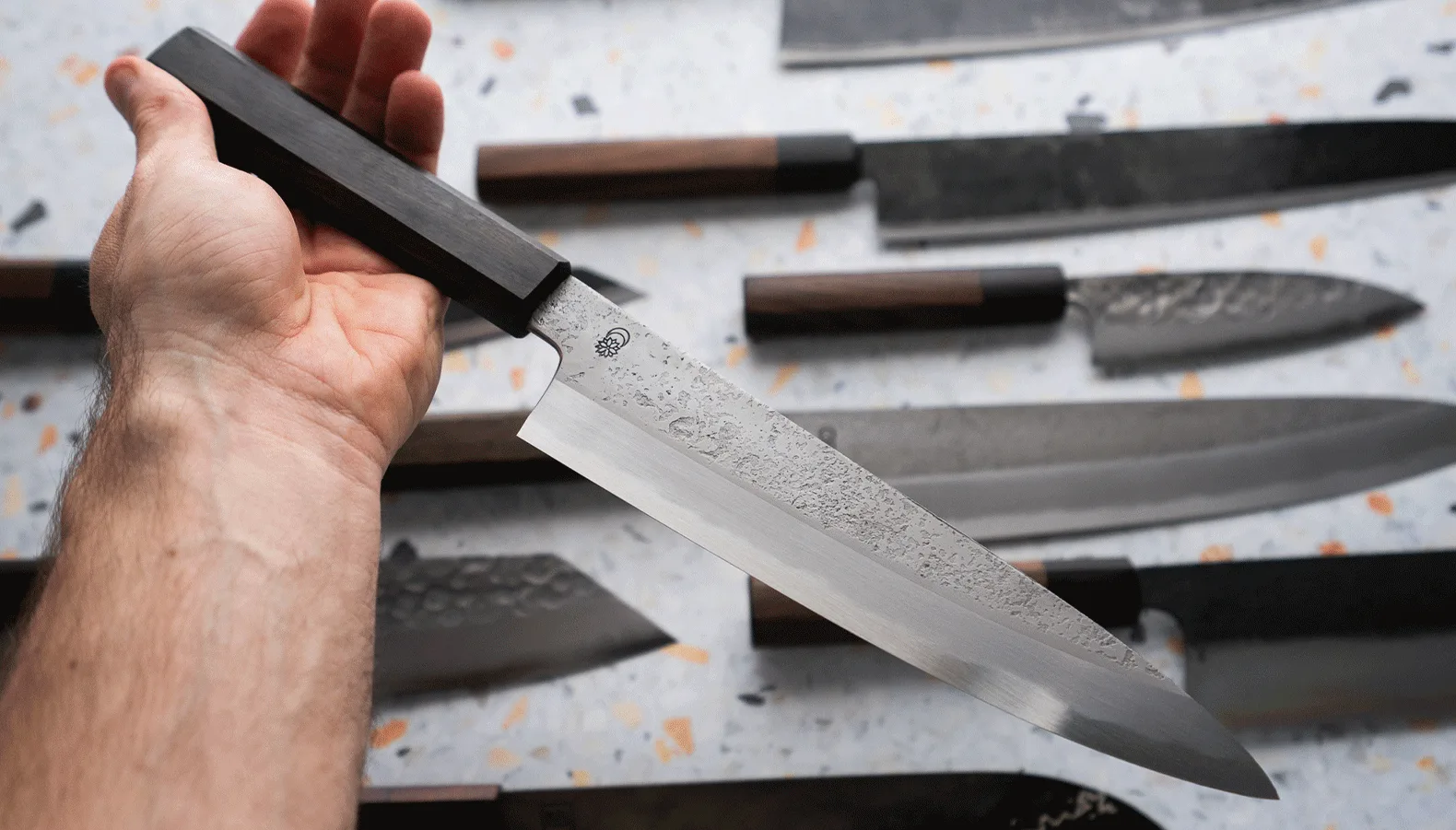
Japanese knife steels at a glance
| Type | Notes | |
|---|---|---|
| White (Shirogami) | Carbon | Very keen, easy to sharpen, reactive; forms a patina |
| Blue (Aogami) | Carbon | Keen with better edge retention and toughness than White |
| VG10 | Stainless | Popular, sharp and low-maintenance, forgiving |
| SG2 / R2 | Stainless | Powder steel, very hard, excellent edge retention |
| Ginsan (Silver 3) | Stainless | Sharpens like carbon but resists rust |
Japanese knife steel FAQ
What steel is used in Japanese knives?
Common choices include stainless steels such as VG10, SG2 and Ginsan for low upkeep, and carbon steels such as White (Shirogami) and Blue (Aogami) for an even keener edge in exchange for a little care.
What is the difference between White and Blue steel?
Both are carbon steels. White (Shirogami) is very keen and easy to sharpen; Blue (Aogami) adds elements that improve edge retention and toughness, so it holds an edge a little longer.
Is carbon or stainless steel better for a Japanese knife?
Carbon takes a sharper edge and sharpens easily but needs care to avoid rust; stainless is lower maintenance and rust-resistant. Choose carbon for ultimate sharpness, stainless for easy everyday use.
Shop Japanese chef knives
From forgiving stainless to keen carbon steel, find the blade and steel that suit how you cook.