
Petty vs Paring Knife: Which Small Japanese Knife Should You Choose?
Both are small blades for the jobs a chef’s knife is too big for. The petty is a Japanese utility knife, longer than a paring knife, that works both on the board and in the hand. The paring knife is shorter and used mostly in the hand for peeling and detail. Pick the petty for one nimble second knife that does more.
Petty vs Paring: the key differences
Both handle small tasks, but length decides whether the knife also works on the board.
| Petty | Paring | |
|---|---|---|
| Length | 120 to 150 mm | 75 to 100 mm |
| Used | On the board and in the hand | Mostly in the hand |
| Best for | Slicing, peeling, small prep | Peeling, coring, detail |
| Versatility | More versatile second knife | Focused on small tasks |
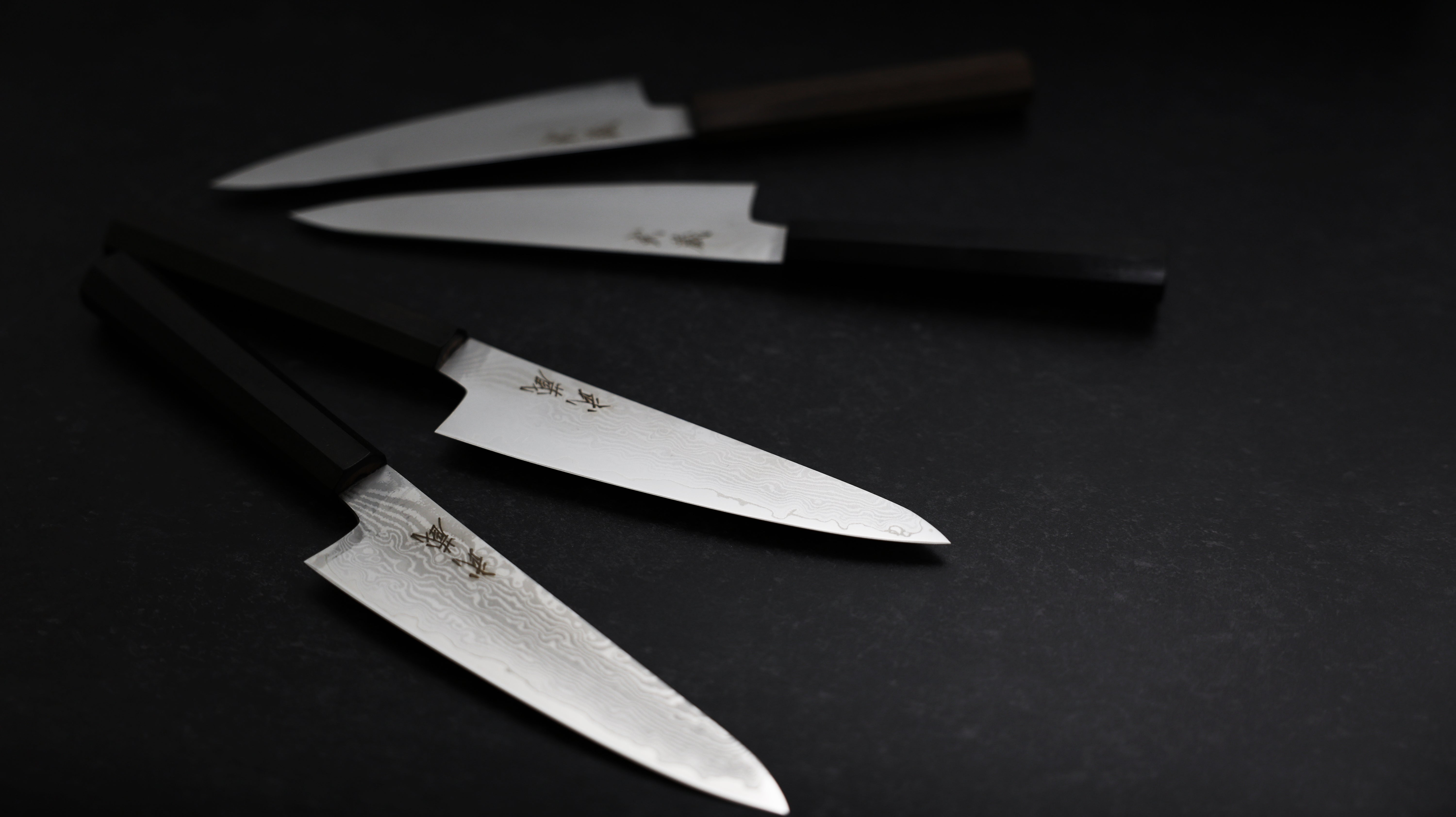
Petty: the nimble second knife
The petty is the in-between blade that bridges a paring knife and a chef’s knife. At 120 to 150 mm it is long enough to slice shallots, herbs and small vegetables on the board, yet short enough to peel, core and trim in the hand.
That dual role is why most cooks keep one within reach as an everyday second knife. It handles the fiddly jobs a big blade is clumsy for without giving up the ability to work on the board, which makes it one of the most-used knives in a Japanese kit.
Shop PettyParing knife: the in-hand detail blade
A paring knife is short and made mostly for in-hand work: peeling, coring, hulling and fine detail. Its compact size gives precise control for the smallest tasks.
The trade-off is reach. It is too short for board slicing, so it complements rather than replaces a longer knife. If most of your small work is in-hand peeling, a dedicated paring knife is the more comfortable tool.
Shop ParingWhich should you buy?
Choose a petty if you want one small knife that covers the most ground, on the board and in the hand; choose a paring knife if most of your small work is in-hand peeling and detail.
Petty for versatility
You want one nimble second knife that slices on the board and peels in the hand. It covers the most small jobs.
Paring for in-hand detail
Most of your small work is peeling, coring and fine detail held in the hand, and you want a compact, precise blade.
Petty vs Paring: frequently asked questions
What is the difference between a petty and a paring knife?
A paring knife is short and used mostly in the hand for peeling; a petty is longer and works both in the hand and on the board, so it covers paring tasks plus the light slicing a paring knife is too small for.
Do I need both a petty and a paring knife?
Not necessarily. A petty covers most small jobs on its own, so many cooks start there. Add a paring knife if you do a lot of in-hand peeling and detailed work.
What size petty knife is best?
A 120 to 150 mm petty suits most kitchens: long enough to slice on the board, short enough to stay agile in the hand.
Find your small Japanese knife
From the versatile petty to the precise paring knife, explore the range and find the right small blade.