
What Is a Nakiri Knife? Uses and How to Use One
A nakiri is the dedicated Japanese vegetable knife: a tall, flat, rectangular blade with a double-bevel edge, made to drop straight down through vegetables so the whole edge meets the board and every cut lands clean. It does one job, clean vegetable prep, exceptionally well.

What a nakiri is used for
The nakiri is built for vegetables. Its flat edge and tall blade let you push straight down through onions, cabbage, carrots and greens with no rocking, and the broad face scoops the prepped food off the board in one motion.
It is quick, forgiving and, because it is double-bevelled, easy for anyone to pick up and easy to sharpen. If most of your prep is produce, nothing is faster or cleaner, which is why it is a favourite for daily chopping, slicing and dicing.
How to use a nakiri
Use a straight up-and-down push cut rather than a rocking motion: line the flat edge over the food, press down, and let the tall blade do the work. The flat profile means the whole edge lands at once, giving clean, even slices.
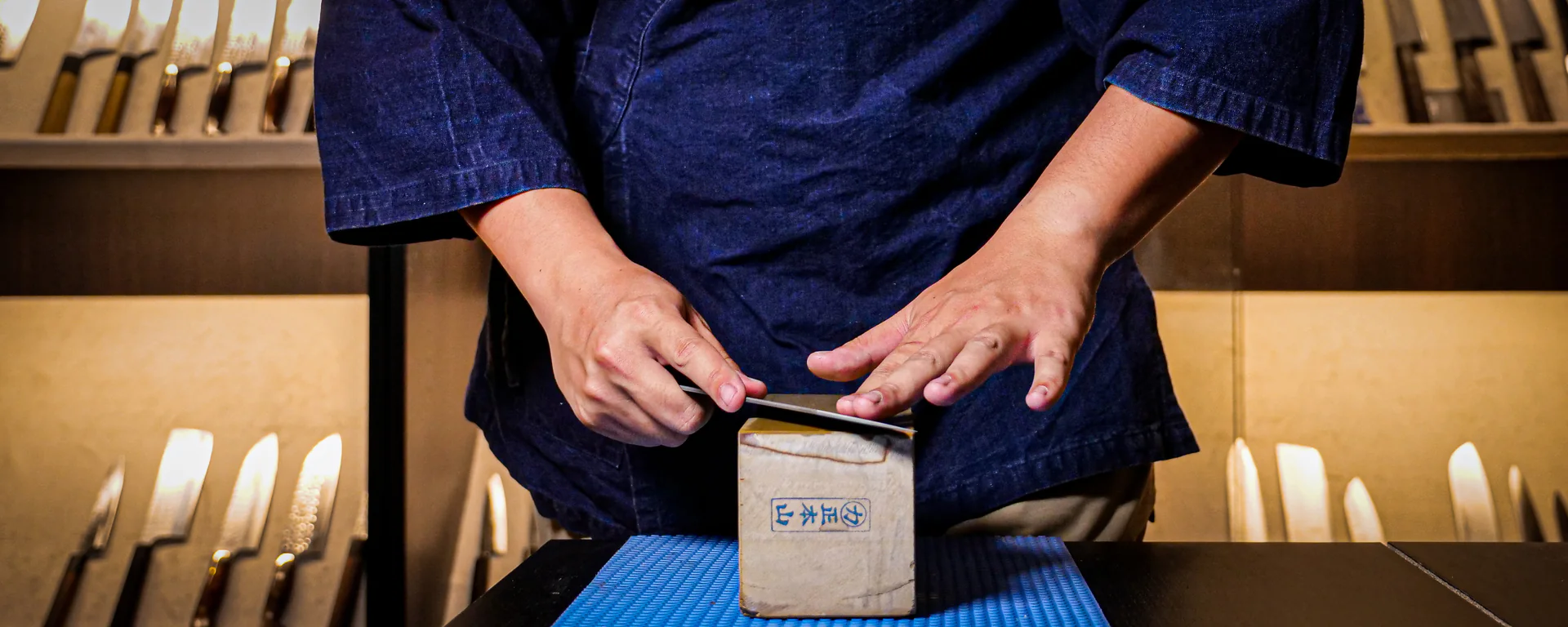
Keep it off bone, frozen food and hard squash rind, where the thin edge can chip, wipe it dry after use, and touch up the edge on a whetstone when it starts to slow. Little and often beats waiting until it is dull.
Nakiri knife FAQ
What is a nakiri knife used for?
It is used for vegetable preparation: slicing, chopping and dicing with clean, straight push cuts. The flat edge and tall blade also make it easy to scoop cut produce off the board.
What is the difference between a nakiri and a santoku?
The nakiri is flat with a square tip and is dedicated to vegetables; the santoku has a rounded tip and works as an all-purpose knife across vegetables, meat and fish.
What are the disadvantages of a nakiri?
It is not suited to rocking cuts, the square tip limits detailed and piercing work, and the thin edge can chip on bone or frozen food.
Shop Japanese nakiri knives
Explore the range and find a nakiri that makes vegetable prep faster and cleaner.