
Yanagiba vs Sujihiki: Which Japanese Slicing Knife Should You Choose?
Both are long, slender Japanese slicers, but one is a specialist and one is an all-rounder. The yanagiba is the traditional single-bevel sashimi knife, made for slicing raw fish in one clean pull. The sujihiki is the double-bevel, Western-friendly slicer that carves meat and fish alike and is far easier to use and sharpen.
Yanagiba vs Sujihiki: the key differences
Both slice proteins in long, clean strokes. The bevel decides how versatile and how forgiving each one is.
| Yanagiba | Sujihiki | |
|---|---|---|
| Bevel | Single bevel | Double bevel |
| Made for | Slicing raw fish, sashimi | Carving meat and slicing fish |
| Skill | Needs single-bevel technique | Easy, either hand |
| Length | 270 to 300 mm typical | 210 to 300 mm |
| Sharpening | Advanced, one side | Standard whetstone |
| Best for | Sushi chefs, purists | Home cooks, all-round slicing |
Yanagiba: the traditional sashimi knife
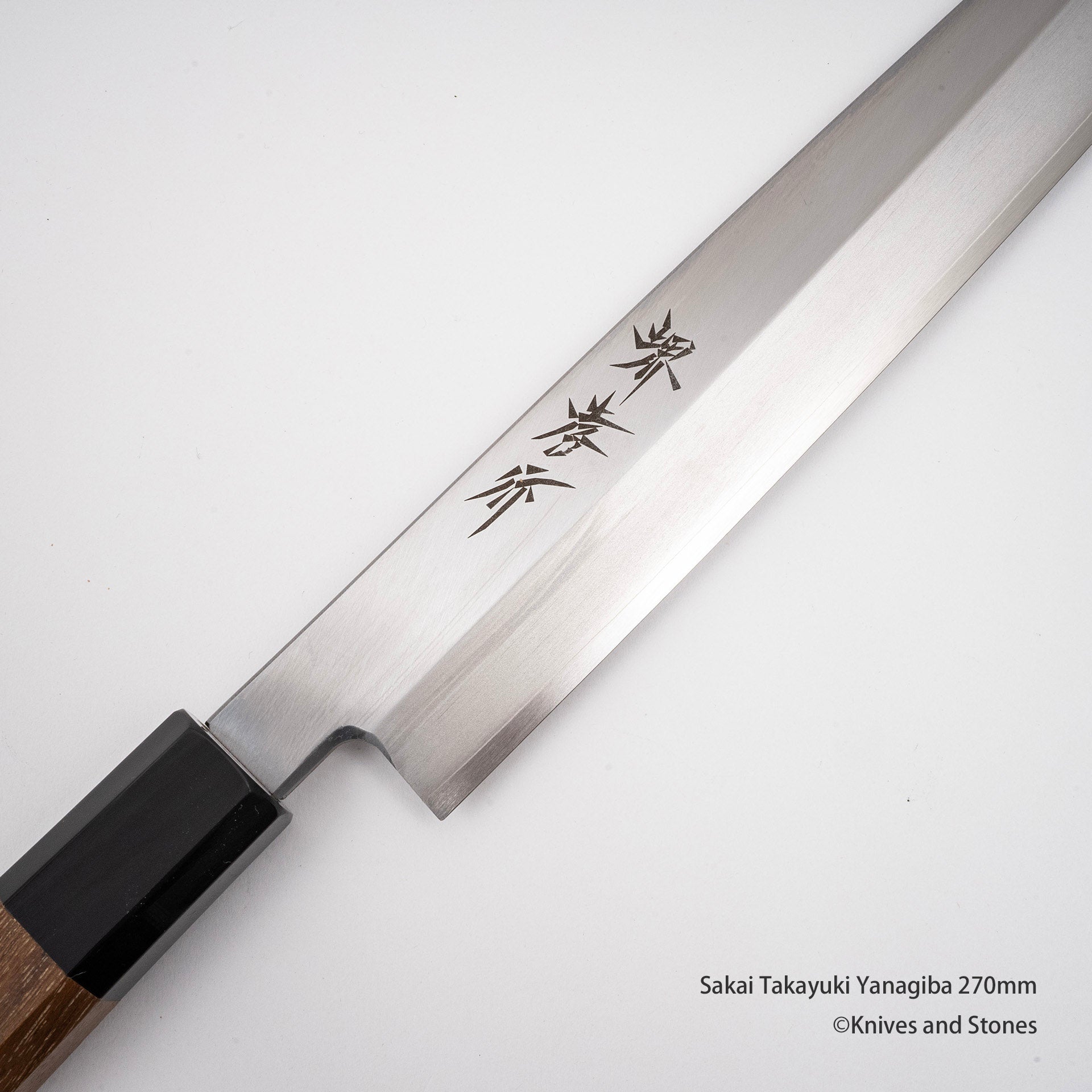
The yanagiba is a long, slim, single-bevel blade shaped like a willow leaf, built to slice boneless fish in one uninterrupted pull. That single, unbroken stroke leaves a flawless, glossy cut surface that keeps the fish tasting its best, which is why it is the essential knife on any sushi counter.
The trade-off is skill. The single bevel steers to one side, so it takes practice to draw a straight slice, and it needs its own sharpening technique. Most yanagiba are right-handed only. It is a specialist that does one thing better than anything else.
Shop YanagibaSujihiki: the easy all-round slicer
The sujihiki is the double-bevel answer to the yanagiba: a long, low, narrow blade that carves roasts, brisket and ham as happily as it slices fish. The low profile glides through proteins with minimal drag, leaving clean, even slices without saw marks.
Because it is double-bevelled it suits both hands, sharpens on a standard whetstone and needs far less technique, which makes it the easier everyday choice. A 240 mm sujihiki handles most home kitchens; 270 to 300 mm suits whole fish and large roasts.
Shop Sujihiki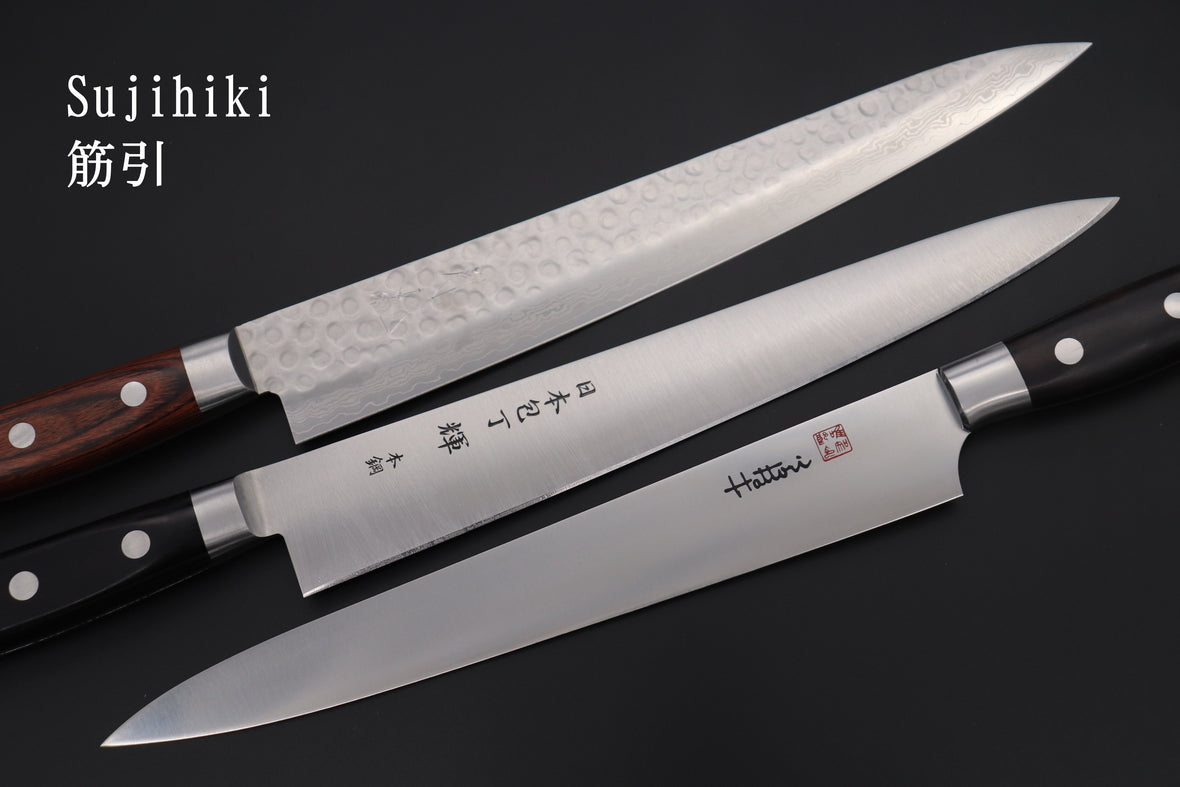
Which should you buy?
If you slice a lot of sashimi and want the traditional, cleanest cut, choose the yanagiba. If you want one versatile slicer for meat and fish that is easy to use and sharpen, choose the sujihiki.
Yanagiba for sashimi
You slice raw fish often, want the cleanest possible cut, and are ready to master a single-bevel edge.
Sujihiki for everyday slicing
You want one long slicer for meat and fish that is easy to use in either hand and simple to sharpen.
Which to buy first
If you are building a Japanese knife kit, the sujihiki is usually the smarter first slicer. It covers roasts, hams and proteins as well as fish, it is forgiving to use and easy to keep sharp, and it works for right- and left-handed cooks alike.
Add a yanagiba later, when dedicated sashimi work justifies a single-bevel blade and you are ready to learn its technique. Many cooks run both: the sujihiki for everyday carving and the yanagiba reserved for fish.
Yanagiba vs Sujihiki: frequently asked questions
What is the difference between a yanagiba and a sujihiki?
A yanagiba is single-bevelled and traditional, made mainly for slicing raw fish; a sujihiki is double-bevelled and more versatile, easier to use for both meat and fish and simpler to sharpen.
Can you use a sujihiki for sushi?
Yes. As the double-bevel alternative to the yanagiba it slices sashimi and sushi cleanly, and it is more forgiving for cooks who have not mastered a single-bevel edge.
Is a yanagiba good for beginners?
It takes practice. The single bevel needs the right angle and its own sharpening technique, so many beginners start with a double-bevel sujihiki and move to a yanagiba as their skills grow.
What size slicing knife should I buy?
A 240 mm blade suits most home kitchens; choose 270 to 300 mm if you regularly break down whole fish or carve large roasts.
Find your Japanese slicing knife
From the traditional yanagiba to the versatile sujihiki, explore the range and find the slicer that fits your work.